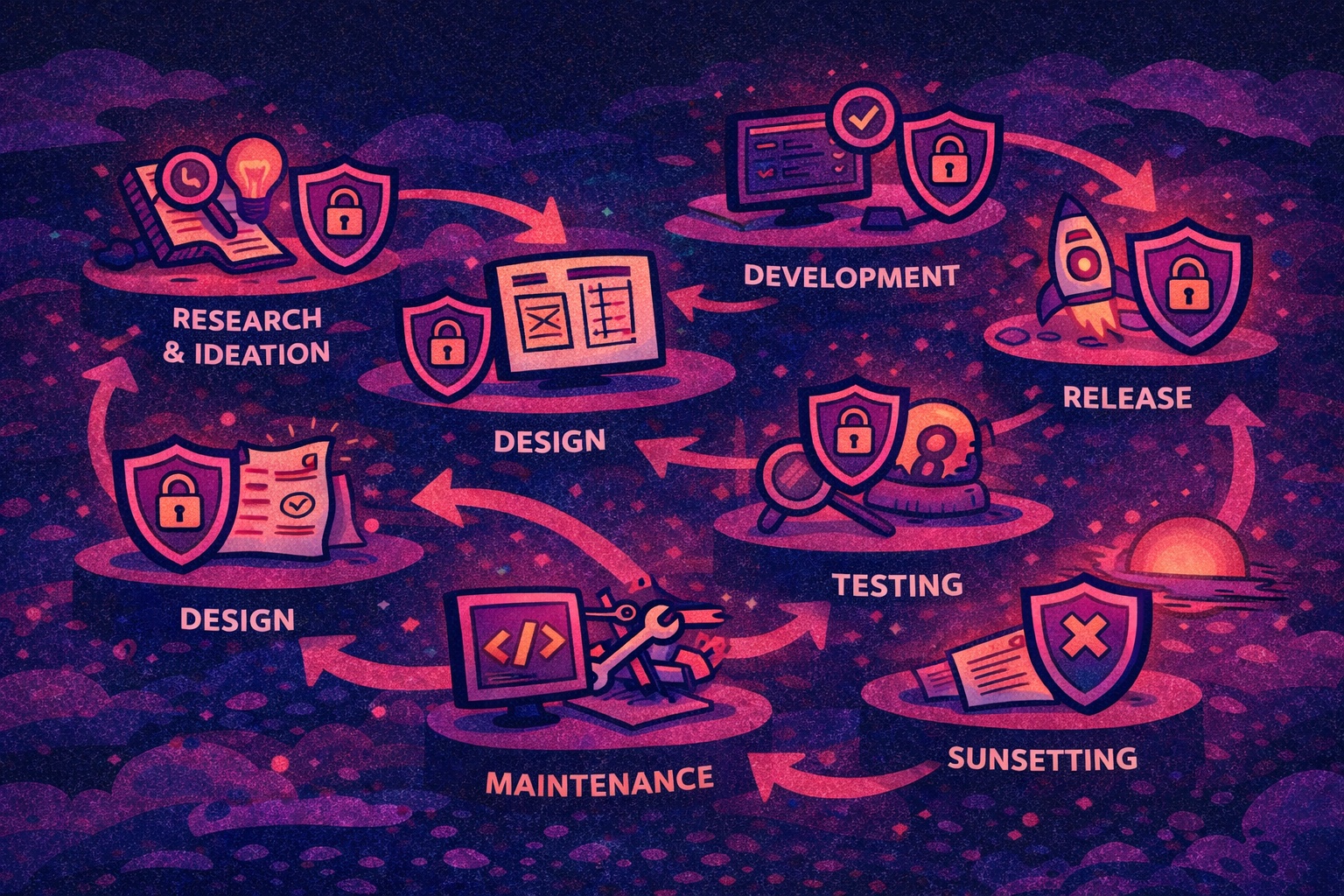
Privacy is not a coding problem. It is a product problem.
If you are leading product management, design, or research teams, privacy is just as much your responsibility as it is your developers'. The difference is that when you get it right early, you save your team from the nightmare of retrofitting privacy into a product that was never designed for it.
Privacy Starts Before the First Line of Code
Think about your research and ideation phase. You are conducting user interviews, running surveys, analysing market data. Every piece of feedback you collect from real people is personal information, and it comes with privacy obligations. Are you telling participants what you will do with their data? How long are you keeping those interview recordings? Who has access to that research repository?
These are not theoretical questions. Companies have been caught out treating research data as "internal only" while sitting on years of unstructured personal information with no clear retention policy. One data subject access request later, and suddenly you are scrambling to find every note, recording, and insight that mentions that person.
Design for Privacy, Don't Bolt It On
By the time you reach the design phase, you are making decisions that either enable privacy or make it nearly impossible. Are you designing features that respect user consent? Are you thinking about how users will update their preferences or delete their accounts?
One SaaS company built a beautiful analytics dashboard without considering privacy. When enterprise clients started asking for data segregation and role-based access controls, the entire feature had to be redesigned. Months of work, frustrated customers, and a delayed roadmap, all because privacy was not in the conversation during design.
The alternative is to design with privacy from the start. Build features that make it easy for users to see their data, update their preferences, and exercise their rights. Your developers will thank you, and your compliance team will stop having panic attacks.
Beyond Development: The Full Product Lifecycle
Development is where most teams think privacy begins, but it is just one phase. Testing should include privacy scenarios. How does your product handle a deletion request? What happens when a user opts out of data collection? If you are not testing these flows, you are shipping blind.
Then comes release and ongoing maintenance. Your retention policies are not just documentation. They are product requirements. If you have committed to deleting data after 12 months, your product needs to actually do that. Too many products manage retention manually because it was never built into the system.
And when you eventually sunset a product, you cannot just flip the switch and walk away. You have data that needs to be migrated, archived, or deleted according to your obligations.
The Business Case for Early Privacy
Addressing privacy early is not just about compliance. It is about efficiency and scaling. When privacy is baked into your product thinking, you do not need emergency retrofits when a big client asks about data residency. You are not blocking releases because someone just realised you are collecting more data than your privacy policy covers.
You are building products that scale without creating technical debt and compliance risk at the same time.
Privacy requirements touch every stage of your product lifecycle. As a product leader, you are in the best position to ensure privacy is considered from research through to sunsetting. The question is not whether you need to think about privacy. It is whether you want to deal with it proactively or scramble to fix it later.
If you are looking at your product roadmap and realising privacy has been an afterthought, reach out. I work with product teams to identify privacy requirements throughout the SDLC and help design products that respect user privacy without sacrificing functionality.