I have sat through plenty of security training sessions over the years. Phishing awareness, password hygiene, secure coding practices. And if you are pursuing SOC 2 or ISO 27001 certification, your team has probably been through the same gauntlet. But here is what has been bothering me: where is the privacy training?
We have gotten good at checking the security boxes. We train on what is mandated by our certifications and compliance frameworks. But privacy? That often gets lumped in as an afterthought, or not covered at all. Privacy training is not just a nice-to-have. It is actually mandated by privacy laws around the world, from GDPR to PIPEDA to the California Privacy Rights Act. If you are handling personal information, which most development teams are, you are required to train your staff on how to handle it properly.
Here are three compelling reasons why training your development team specifically on privacy is worth the investment.
Self-Policing Through Awareness
When developers understand privacy regulations and can recognise personal information in all its forms, something useful happens: they start catching issues before they become problems. A developer who has been trained on privacy will spot when a new feature suddenly starts collecting more information than it should. They will raise a flag when a bug fix inadvertently exposes data that should be protected.
This is particularly valuable if you are a startup or a bootstrapped organisation without the budget for enterprise-grade data discovery tools. Your developers become your first line of defence. They can see when colleagues are straying into risky territory and can course-correct early, before code gets merged and deployed.
Making Data Subject Requests Actually Complete
Here is a scenario: a data subject access request comes in, the team scrambles to pull together the information, and then months later you discover you missed an entire database or log file that contained relevant personal information. Now what?
When developers understand what constitutes personal information and where it lives in your systems, responding to data subject requests becomes significantly easier. They know where to look. They understand what needs to be included. The result is that you actually provide complete responses, which keeps you compliant and builds trust with your users.
Understanding the Full Scope of Personal Information
Security certifications like SOC 2 or ISO 27001 talk about whether data is "sensitive" or not. It is typically a binary categorisation. Privacy law is a whole different picture.
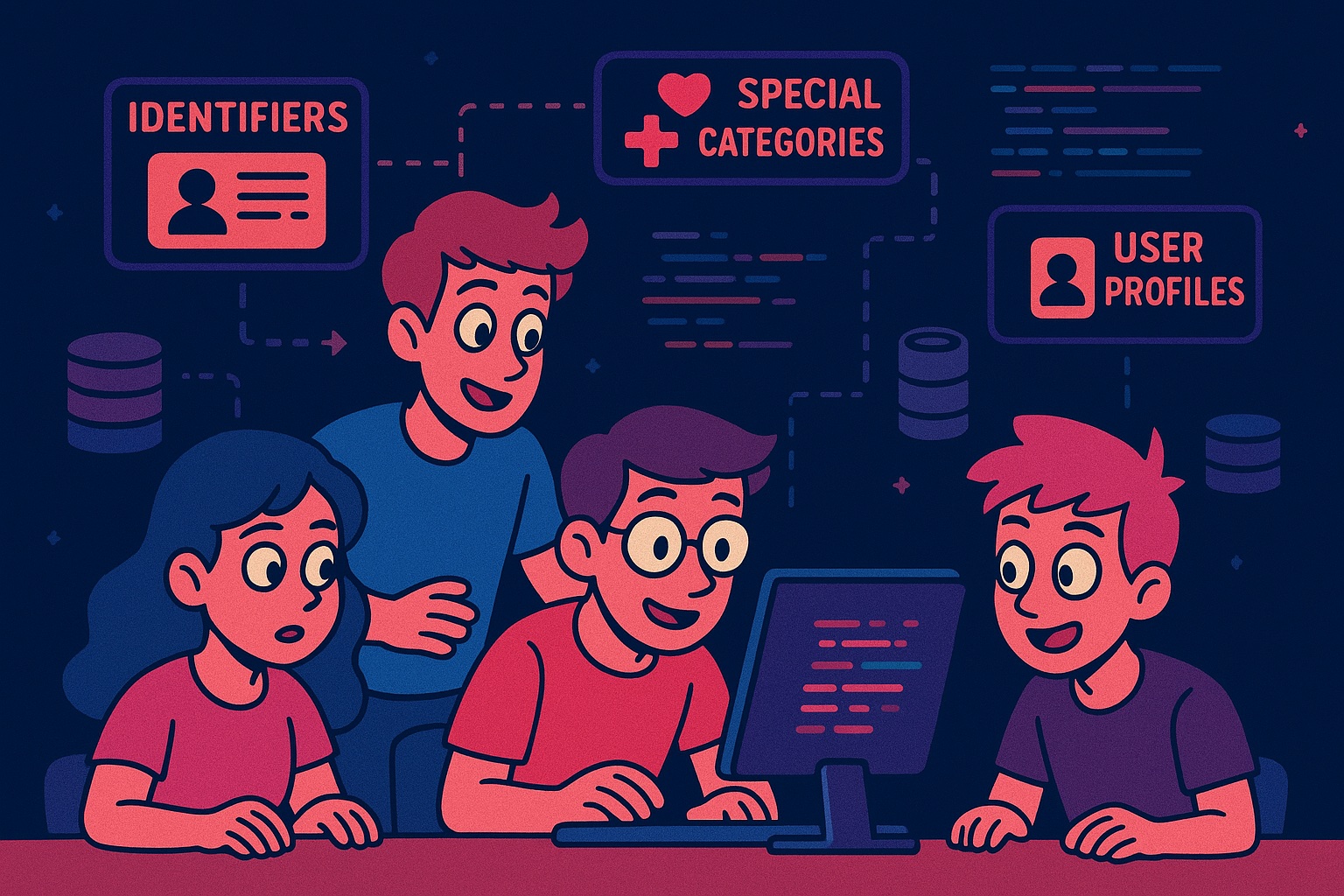
Personal information is not just one category. You have plain identifiers, but you also have special categories: health information, sexual orientation, biometric data, criminal records. Each of these may have different handling requirements under various privacy laws.
I have seen this trip up development teams more than once. A developer looks at a GUID or internally generated user ID and thinks it is not personal information because they created it internally. But by the definition of most privacy laws, if that identifier is part of a profile about an individual, it is personal information.
This misunderstanding leads to incomplete data mapping, inadequate security controls, and non-compliant data retention practices, all because nobody explained that personal information is broader than what security frameworks typically treat as "sensitive data."
Making It Happen
Training your development team on privacy does not have to be a massive undertaking. A lunch-and-learn session, a more formal workshop, or pre-recorded training that developers can complete at their own pace all work. The important thing is that it happens, and that it is tailored to the actual work your developers do.
If you are looking to get privacy training off the ground, reach out. Whether you need someone to come in and speak to your team about privacy fundamentals, want to develop a custom training program, or need consulting on how to embed privacy awareness into your development processes, let us make sure your team has the knowledge they need to build privacy into your products from the ground up.