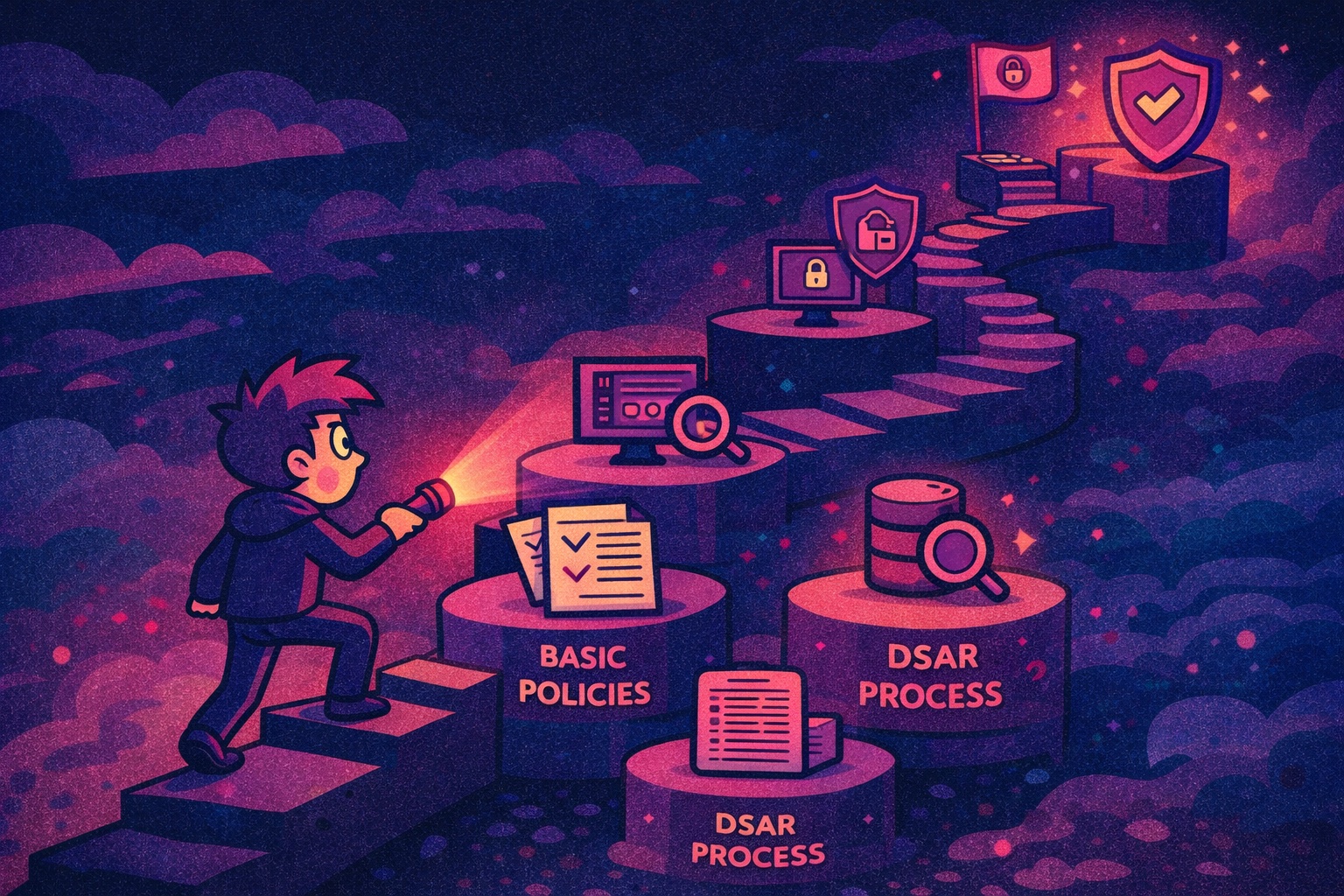
I talk to a lot of founders and early-stage CTOs who just flake out when they hear about privacy compliance. They have read about GDPR fines, watched competitors scramble with incident response, and now they are convinced they either need a bulletproof privacy program before they can even ship their MVP, or nothing at all. The result in both cases is paralysis.
Here is what I wish all founders were told: you do not need to implement every privacy requirement under the sun on day one. Privacy compliance is not an all-or-nothing game.
Where You Are Matters
One of the genuine strengths of privacy law is that your obligations scale with your operations. You are not expected to have the same privacy infrastructure as a multinational bank when you are a three-person startup running out of a co-working space. The regulations acknowledge this, even if they do not spell it out in neon letters.
What you need at the beginning is fundamentally different from what you need at scale. A startup processing a few hundred user records has different risk exposure than an enterprise handling millions of transactions daily. Your privacy program should reflect that reality.
The Non-Negotiables
That said, there are certain obligations you simply cannot skip. These are your table stakes:
- You need to know what personal information you are collecting and why. A basic data map. Not a sprawling, colour-coded masterpiece that took three months to build. A simple document that records what data you collect, where it lives, who has access, and what you use it for.
- You need the ability to respond to data subject access requests. If someone asks what information you have about them, you need to be able to answer. This does not require enterprise-grade software from day one. It might just mean having a clear process and the technical ability to query your systems.
- You need some policies. Not a phone-book-sized manual that no one will read. A privacy policy that actually explains what you do. Terms of service that are clear. An internal policy on how your team handles data.
Growing Your Program
The trick is to build your privacy program alongside your business. As you add new features, enter new markets, or start processing more sensitive data, your privacy controls need to evolve. This is where many companies stumble. They set up their initial privacy framework and then never touch it again, even as their business transforms completely.
I have seen this play out too many times. A company launches with a simple newsletter signup, implements basic privacy measures, and then three years later they are processing payment information, health data, and employee records with the same controls they had on day one. That is where you get into trouble.
Right-Sizing Your Approach
The key is to do proper risk assessments based on where you actually are. If you are pre-revenue with no users yet, you do not need the same privacy apparatus as a Series C company with enterprise clients demanding vendor assessments.
Start with what makes sense for your current reality. Build out your data map. Set up a process for handling data requests. Draft clear, honest policies. Make sure your development team understands the basics of data minimisation and security.
Then, as you grow, layer in more controls. Add vendor assessments when you start working with third parties. Implement more rigorous access controls when your team expands. Build out proper consent management when your data processing gets more complex.
Walk before you run. Your privacy program should mature with your business, not be a compliance checklist you ignore after ticking the boxes once.
If you are trying to figure out what right-sized privacy looks like for your business, or you need help building a program that can scale with you, reach out.