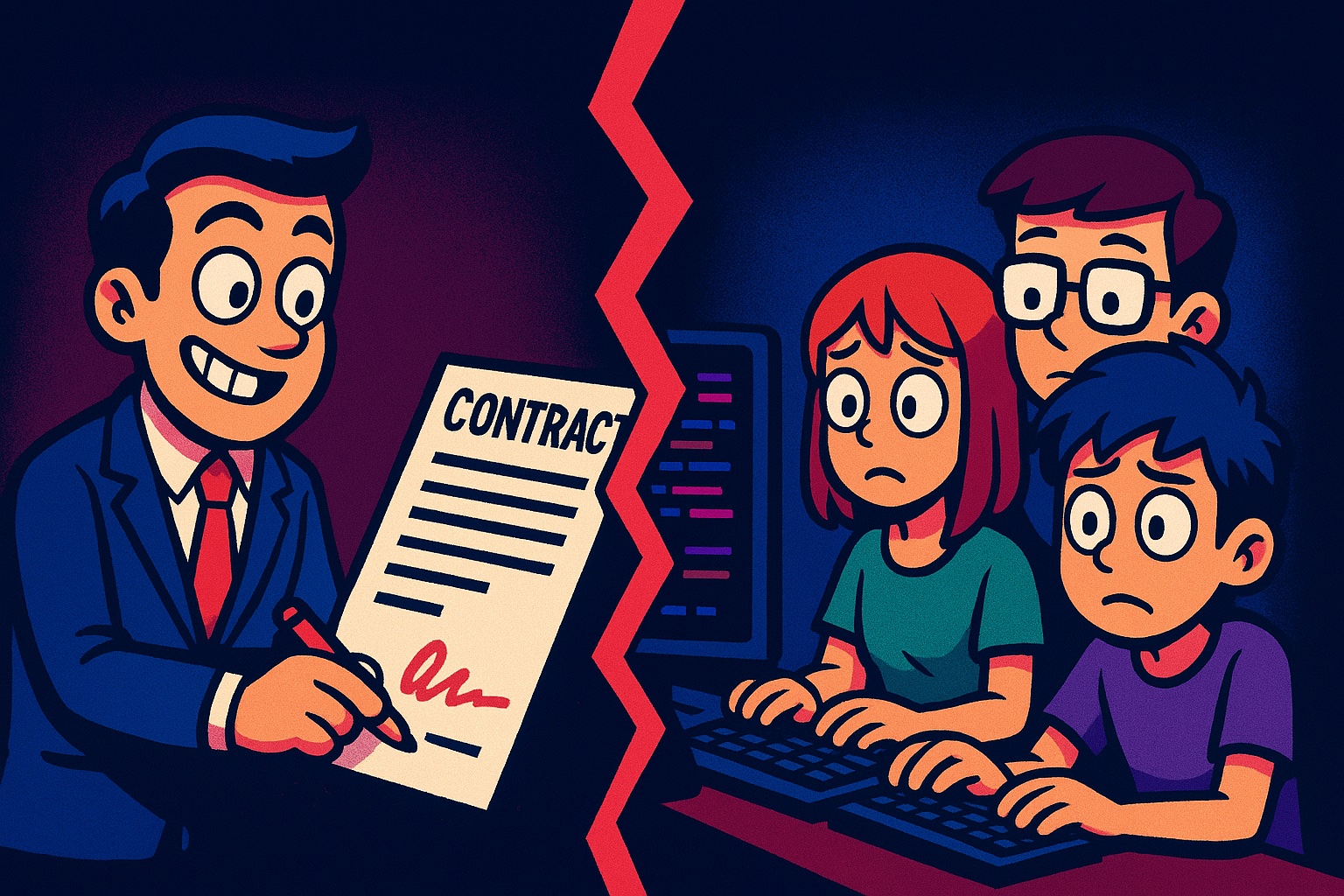
Technical leaders are often surprised to discover the security and data processing obligations buried in their enterprise contracts. Particularly in B2B companies, and particularly when serving European or Canadian markets, the legal documents being signed by sales and legal teams are increasingly full of requirements that translate directly into engineering work.
Data processing agreements, standard contractual clauses, specific encryption standards, deletion capabilities, audit rights. These are not abstract legal concepts. They are features that need to be built, and development teams rarely see the contracts that commit to delivering them.
The Development Disconnect
Sales teams close deals and move on. The contractual commitments they make, often under pressure to get a deal across the line, do not automatically flow into sprint planning or product roadmaps. Security controls and data handling capabilities that were promised in the agreement must then be built retroactively, consuming budget and capacity that was not accounted for.
The cost compounds. Compliance features designed into a system from the start cost a fraction of what they cost when retrofitted. And the compliance gap between what was committed and what was actually built does not close on its own. It sits there, quietly, until an audit, a client request, or a regulatory inquiry surfaces it.
The Efficiency Case for Getting Ahead of It
The good news is that contractual obligations from different clients often overlap significantly. Implementing SOC 2 compliance for one client gives you a foundation that extends across multiple contracts. GDPR compliance features cover similar requirements in other jurisdictions. One well-designed privacy architecture serves multiple enterprise buyers.
Companies that address these obligations proactively gain a compounding advantage:
- Overlapping frameworks handled in consolidated development sprints rather than bespoke client-by-client patches
- Training that covers multiple compliance requirements at once
- Policy and documentation that serves multiple contracts simultaneously
- A sales story that shortens the procurement cycle for enterprise clients
Building the Bridge
The gap between sales commitments and development capacity closes with systematic communication channels between customer-facing and technical teams. Developers do not negotiate deals, but they need to be part of compliance conversations before contracts are signed, not after.
This means creating a process where legal and sales teams flag data processing requirements, security commitments, and privacy obligations before a contract is executed. Standardised checklists that identify when contract language creates development work. A direct line between the terms in an agreement and the backlog that has to deliver on them.
Strategic Advantage
Companies that treat privacy and security compliance as a product capability rather than a cost centre find themselves in a stronger position with enterprise buyers. When your product natively supports the security and privacy requirements that procurement teams demand, deals close faster. When competitors are scrambling to retrofit capabilities in response to client requests, you are not.
The question is not whether these obligations will eventually surface. They will. The question is whether you find out during a client audit or before you sign the contract.
If you are trying to get a handle on what your contracts are actually committing to from a technical standpoint, reach out.